Franklin, CT Chimney Services: Historic Homes & Insert Planning
Inspection-led chimney care for old fireplaces, heating flues, masonry and modern venting choices.
Before Choosing an Insert, Map Every Venting Path
An early-1800s house can hold more than one chimney question. An old fireplace may sit above a metal firebox, a factory-built chimney may run outdoors, and a boiler may vent through a separate passage in a stone basement. Therefore, good Franklin CT chimney services begin by identifying which parts belong together—and which do not.
Spotless Chimney inspects from the appliance area to the termination. First, we document the firebox, connector, accessible flue surfaces, masonry, roofline and cap. Then we explain how those conditions affect sweeping, repair, relining or insert planning. That sequence gives Franklin homeowners a clear starting point before anyone promises a product or construction scope.
A Real Franklin Inspection: One Old House, Several Decisions
In December 2022, a Spotless Chimney technician completed a full-service inspection at a Franklin home recorded as dating to the early 1800s. The fireplace was unfamiliar to the homeowner, who wanted it checked before use and also wanted to understand wood- and pellet-insert possibilities.
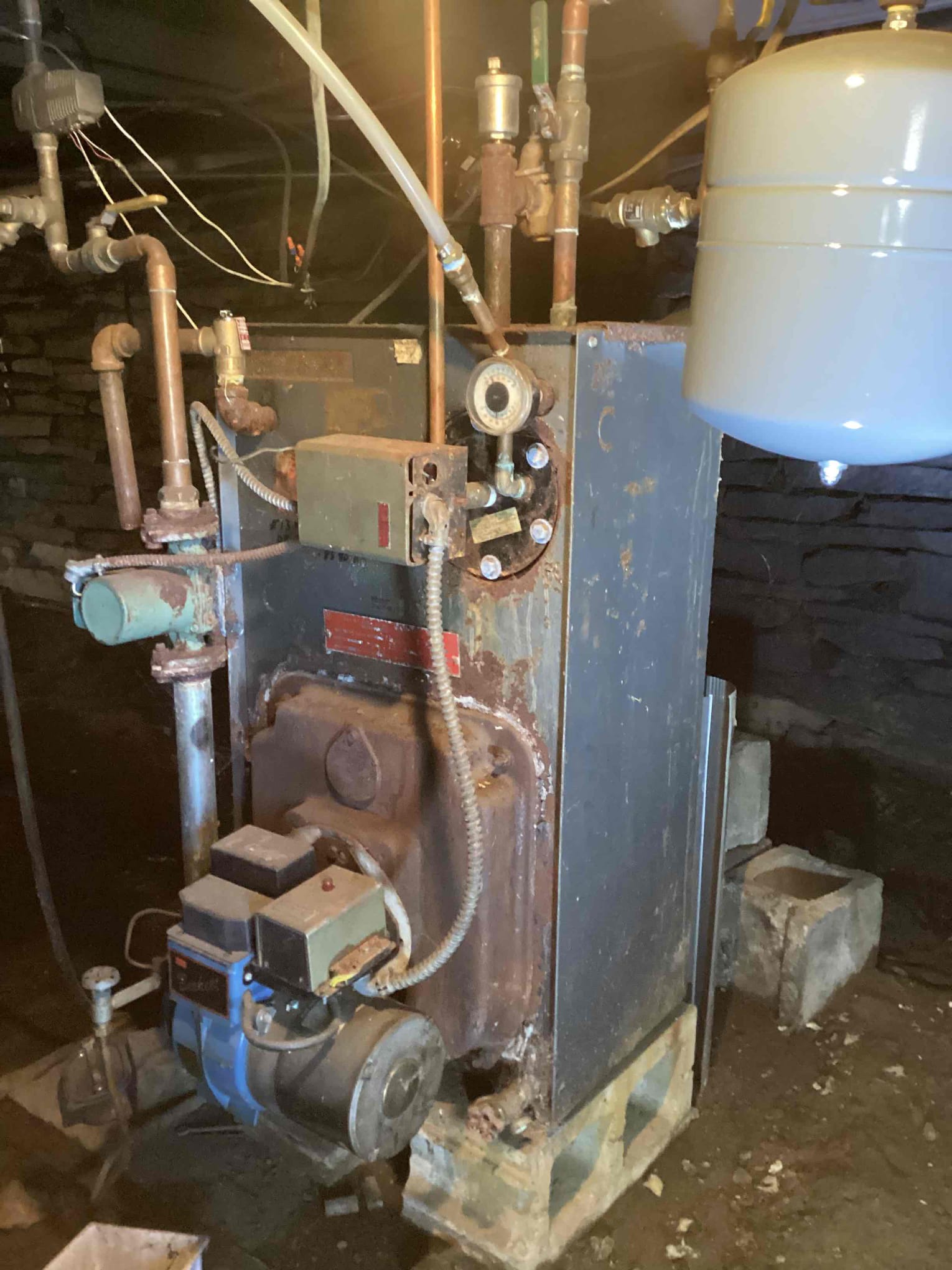
The visit was an inspection, not an installation. Our field record documented the existing fireplace and metal firebox, the exterior Class A chimney route, the heating-appliance vent path, the stone basement and the roof approach. Afterward, separate estimates outlined possible work. Those recommendations included different insert and chimney routes, so they should not be confused with completed repairs.
Three Systems the Inspection Kept Separate
1. Fireplace and Metal Firebox
The fireplace opening, firebox construction and available vent route shape whether an insert can fit and vent correctly. In this Franklin inspection, the existing metal firebox was an important planning detail. Removing or modifying it appeared only in proposed scopes; no such work was completed during the visit.
2. Exterior Class A Chimney
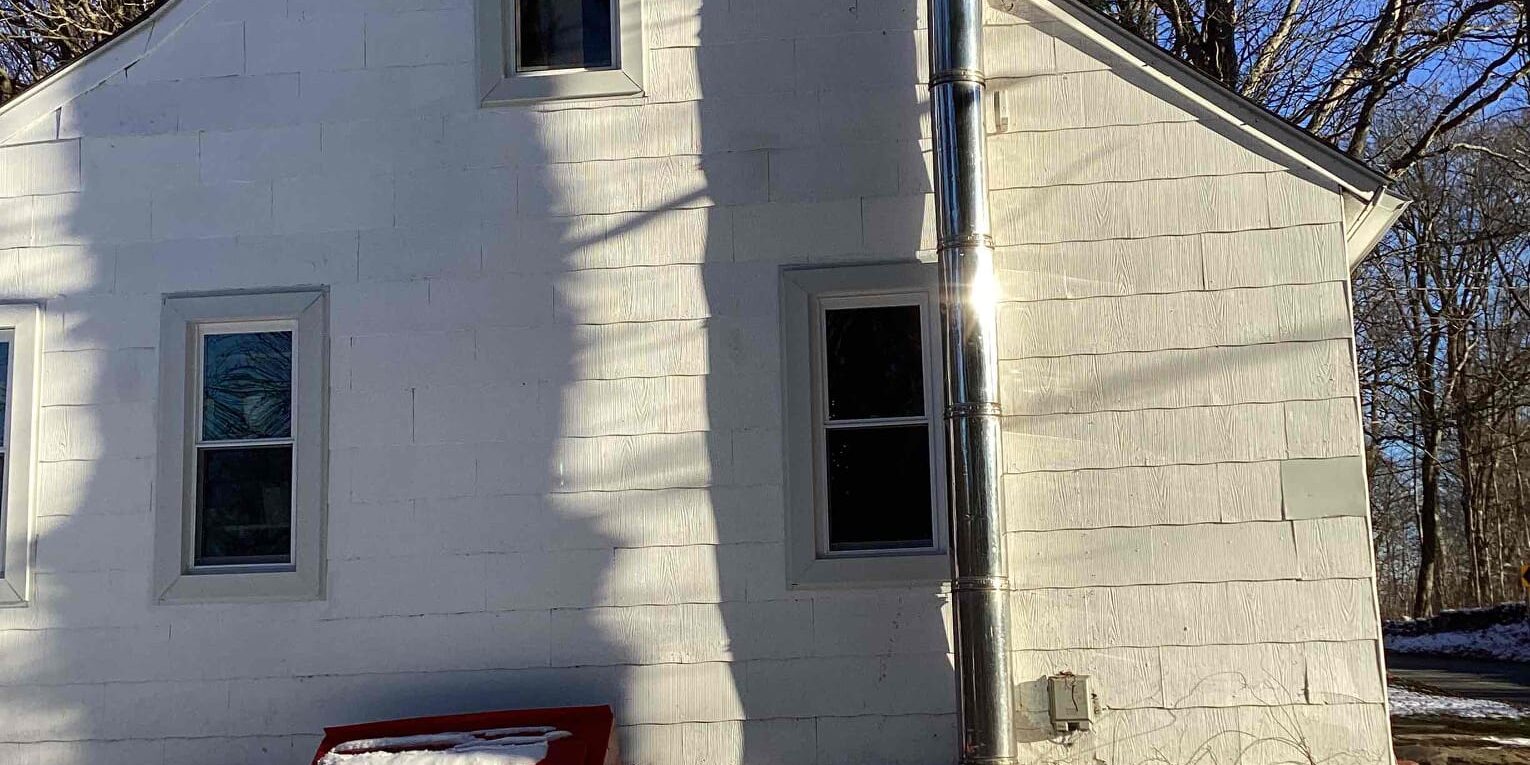
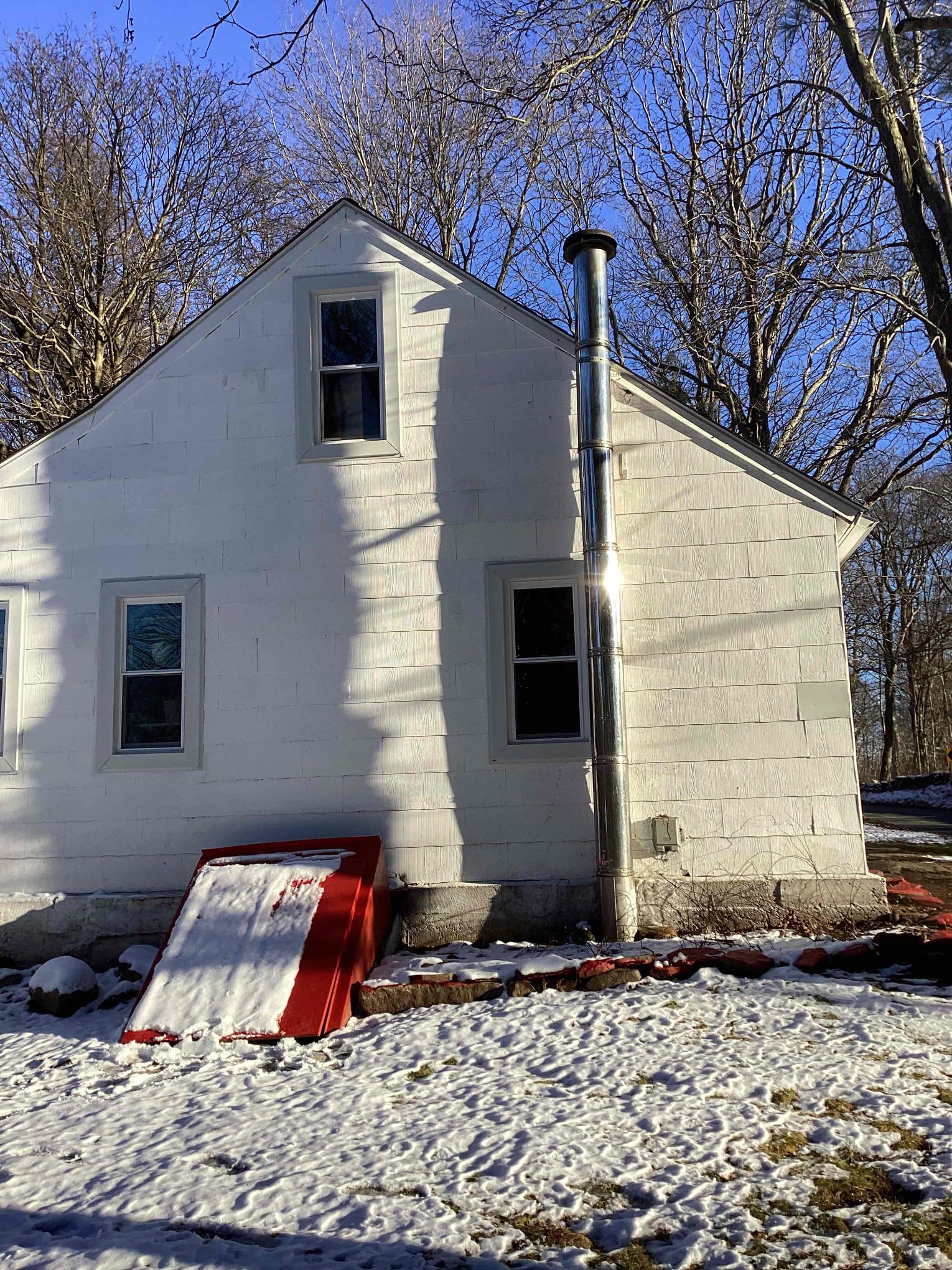
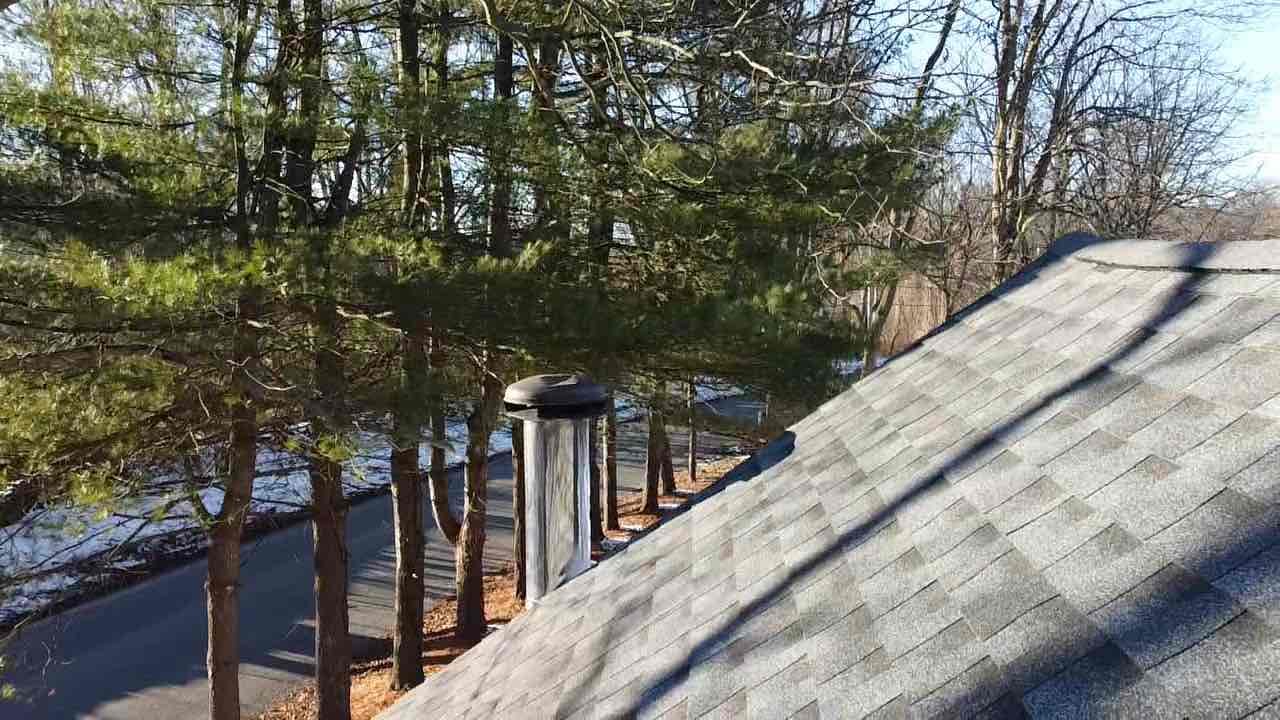
A tall metal chimney ran along the exterior wall. Because insert options can require a specific diameter and listed venting system, the technician documented the existing route before discussing replacement with a smaller Class A system. Again, that was a recommendation for consideration, not a finished Franklin installation.
3. Heating-Appliance Flue
The basement also contained a heating appliance and smoke-pipe path. Its connector was recorded separately from the fireplace system because each appliance needs its own compatible route. This distinction matters: a fireplace decision should never hide an unrelated heating-flue concern.
Historic Materials Change Access and Repair Planning
Old homes often combine materials from different eras. Here, rough stone foundation walls met later smoke-pipe and vent components, while the exterior chimney rose above a steep roof. As a result, inspection had to connect what was visible downstairs with the termination outdoors.
The field notes also treated access as part of the potential repair plan. They referenced roofline work, roughly 20 feet of staging, about 300 bricks and lead flashing for one proposed masonry scope. Those quantities were planning notes rather than completed construction. Still, they show why Franklin CT chimney services should consider safe access, material matching and water-shedding details before a repair price is finalized.

Get the Inspection Before the Estimate
Start with documented conditions, then choose the repair or insert route that fits the house.
Franklin CT Chimney Services for the Whole System
Chimney and Fireplace Inspections
We review accessible firebox, smoke chamber, liner, connector, masonry and termination conditions. When concealed areas could change the recommendation, camera-assisted inspection can add useful detail. The written findings then support maintenance, repair or appliance planning.
Sweeping and Deposit Removal
Inspection comes first because the amount and type of deposit determine the right cleaning method. We contain dust, remove accessible soot or creosote and explain any conditions that need more evaluation. If the flue is clean, we will not turn an inspection into an unnecessary sweep.
Insert and Stove Venting
Wood and pellet appliances have different venting requirements. We measure the opening and route, review the existing construction and follow the appliance and vent manufacturer’s listed instructions. Consequently, the plan is based on the actual house instead of a one-size-fits-all package.
Heating-Flue and Liner Work
Boilers, furnaces and other heating appliances need a correctly sized, continuous exhaust path. We evaluate the connector, thimble, liner and top termination together. If relining is appropriate, the specification depends on fuel, appliance input, chimney height and available space.
Brick, Stone and Water Repairs
Repointing, partial rebuilding, crown work, flashing and breathable water protection solve different problems. Therefore, we trace the likely water route and identify the failed material before recommending a repair. Historic stone and mixed masonry deserve especially careful evaluation.
Caps, Crowns and Roofline Details
The chimney top sheds weather while allowing exhaust to exit freely. We check cap condition, crown cracks, flashing transitions and roof access. In addition, we plan staging or protection when steep slopes and tall exterior runs make access part of the job.
Franklin Fireplace and Chimney Questions
Should I use an unfamiliar fireplace before it is inspected?
No. An inspection should come first when the history is unknown, especially in an older home. Hidden gaps, past alterations, debris or an incompatible component may not be visible from the room.
Does a full-service inspection always include sweeping?
Not automatically. The technician first evaluates the deposit and system condition. If cleaning is needed and appropriate, the scope can address it. However, a damaged or obstructed system may require another step before routine use.
Can a wood insert and pellet insert use the same vent plan?
Usually not. Each appliance has listed clearances, liner sizes and vent components. The fireplace opening may be the same, but the approved route must match the chosen appliance and existing construction.
Why document a heating flue during a fireplace visit?
Older houses can place multiple vent systems close together. Documenting each path helps prevent one appliance’s plan from being mistaken for another. It can also reveal a separate maintenance need.
Does an estimate mean the recommended work was completed?
No. An inspection report and estimate describe conditions and possible next steps. Completion should be supported by a signed work scope, appointment record and closeout documentation. On this featured Franklin visit, inspection was completed; the installation and repair items discussed above were proposed options.
Tell Us What Your Franklin Home Is Venting
Share the appliance, chimney type, symptoms and last known service. We will help arrange the right next step.